
Criminal Defense
What Exactly Is a White Collar Crime?

A white collar crime is a nonviolent crime committed for financial gain. According to the FBI, white collar crimes are characterized by concealment, deceit, or violation of trust. The motivation for this type of crime is to obtain a personal or business advantage, or to obtain or avoid losing money, property, or services.
Probable Cause vs. Reasonable Suspicion: What’s the Difference?

Probable cause and reasonable suspicion are two similar sounding concepts, but they are applied in very different ways. Both are used by law enforcement officers as a determining factor in whether to detain a suspect for questioning, arrest someone, or search and seize evidence. The U.S. Supreme Court set the standards for reasonable suspicion and probable cause. Although they are similar in some ways, there are key differences between these two concepts.
Your Colorado Arrest Glossary
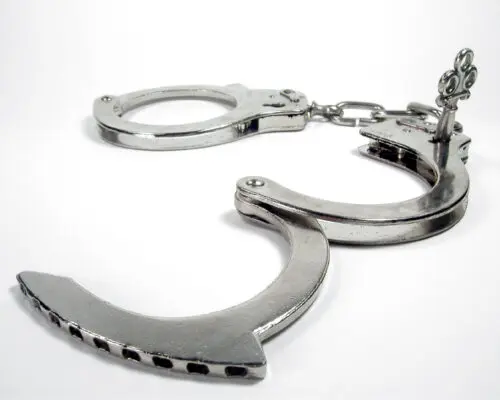
If you are arrested in Colorado, you may hear some unfamiliar terms from law enforcement, the courts, and even your own attorney. As though the situation were not bad enough, now you are struggling to understand foreign terms being applied to you and your case. To prepare you in case the worst should happen, we have compiled a glossary of terms that you may hear after you have been arrested in Colorado.
How to Seal a Criminal Record

In the age of the internet, your private affairs and information are more public than ever. And it’s only getting worse. Particularly bothersome is the public’s ability to locate and retrieve criminal records. If you have applied for school, a job, or even a volunteer position recently, you certainly know that businesses can and do run criminal background checks.
You Accidentally Brought a Gun to the Airport – What Now?

So, you accidentally brought a gun to the airport, and it was discovered by the TSA or other airport authorities. What now? The first thing to note is that this happens to many people. While the number of guns discovered at airports is relatively rare compared to how many people own guns in the United States, firearm discoveries still occur every day, even in Colorado.
Crime Lab Scandals

During the last ten years, the public has become fascinated with forensic science. Crime shows like CSI and Law & Order have glamorized the profession. Enrollment in degree programs in forensic science is on the rise. High schools offer electives in forensic science and your child can even take crime scene investigation summer camp.
Crime labs are an important part of our judicial process. Their purpose is to scientifically analyze and preserve evidence of crimes. Done right, forensic scientists help exclude the innocent and convict the guilty. Done wrong, innocent people are convicted of crimes they didn’t commit.
How Long Can You Drive with a Broken Windshield in Colorado?
 It’s extremely frustrating when your car suffers a cracked windshield and, regardless of how it happened, getting a windshield replaced can be time-consuming and expensive.
In Colorado, the main culprits of cracked windshields are road “sand” and heavy commercial trucks, which kick up small rocks and other debris. If you have spent any amount of time driving through the state, you are probably familiar with this common hazard.
What Should You Do If You’re Pulled Over by Police?
 Being pulled over by the police can be a highly stressful situation. Especially in the early moments; it may not even be clear why you are being contacted. The way in which you respond to the officer during a traffic stop can go a long way in protecting you, both during the initial interaction and in the case of future legal action.
Red Light Cameras Returning to Colorado Springs?
 It’s one thing to be pulled over for a traffic violation by a live police officer. We understand that they are expected to monitor Colorado streets for unsafe and illegal driving behavior, but we also know that there is a system in place to contest tickets that we believe might be in error. But with the possible return of red light cameras to Colorado Springs, many drivers have a lot of questions regarding what that means in terms of fairness and enforcement.
Can What You Say on Social Media Be Held Against You?
 With the recent explosion of social media platforms such as Facebook, Twitter, and Snapchat, the ways in which we communicate with each other, both publicly and privately, are evolving. As is often the case with new technologies, our laws have not necessarily caught up and it’s unclear how to apply them. For example, can what you say on social media be used in a court of law?