
Colorado Springs Criminal Defense Blog
Colorado Saw Drops in Violent Crime Rates in 2014, According to Study
 The 2014 “Crime in Colorado” report released last week by the Colorado Bureau of Investigation reported a decrease of 2.5 percent in the crime rate per 100,000 Colorado residents between 2013 and 2014.
Timothy Bussey Obtains the ACS-CHAL Forensic Lawyer-Scientist Designation
 Timothy Bussey recently received another title to add to his list of notable credentials. On April 25, 2015, the Colorado attorney obtained The ACS Forensic Lawyer-Scientist Designation as recognized by the Chemistry and Law Division of the American Chemical Society – an exclusive achievement reserved for attorneys who successfully complete a number of specific hands-on courses in forensic science. Mr. Bussey is currently the only Colorado lawyer to earn this title.
Requirements for the ACS-CHAL Forensic Lawyer-Scientist Designation include:
- Completing an ACS Forensic Chromatography class twice, which includes DUI ethanol based analysis
- Completing the ACS Solid Drug Dose (Forensic Drug Analysis) class
- Completing the ACS Forensic DUID (Forensic Principles of DUID) class
- Successful completion of a proficiency and knowledge examination based on the courses
Mr. Bussey’s dedication to using true scientific results and evidence in his legal practice has earned him a strong reputation in the field of DUI Law already, having exposed issues in the Colorado Department of Public Health and Environment Crime Laboratory’s blood alcohol tests that produced false positives and unfair criminal charges. In completing the American Chemical Society’s Forensic Lawyer-Scientist program, Mr. Bussey strengthens his ability to use legitimate scientific evidence in the pursuit of justice for his clients.
By bringing forensic evidence into the courtroom, whether handling a personal injury claim or criminal defense case, Mr. Bussey takes every effort to let the facts speak for themselves, ensuring that his clients achieve fair and just outcomes.
For a free and confidential consultation, give The Bussey Law Firm, P.C. a call at (719) 475-2555 or send us a message online. Our legal team is ready to help you.
Colorado State Patrol Issued 298 DUI Arrests Over Memorial Day Weekend
Memorial Day weekend 2015 saw approximately two million more drivers on the roads nationwide than in the previous year, according to an estimate by the American Automobile Association (AAA). Memorial Day also marked the start of “Checkpoint Colorado,” a program that increases the number of checkpoints and police officers on the road throughout the summer, scanning for signs that drivers might be driving under the influence of alcohol or other drugs (DUI).
The increased patrols during Memorial Day also resulted in 298 arrests on suspicion of drunk driving. Although this number represents a significant decrease from the 408 DUI arrests made over Memorial Day weekend 2014, the Colorado State Patrol (CSP) and over 80 local law enforcement agencies throughout Colorado have promised to keep up their increased patrolling through the next hundred days.
Colorado Passes Felony DUI Bill
 Colorado has passed a bill which significantly increases the penalties for those who have prior drinking and driving convictions. On June 1, 2015, Governor John Hickenlooper signed House Bill 15-1043 into law. This new law elevates a fourth conviction or greater for DUI, DUI Per Se, or DWAI over the course of a person’s lifetime to a class 4 felony offense. Addressed below are some frequently asked questions pertaining to the new law.
Q. When Does The New Law Go Into Effect?
A. The new law goes into effect on August 5, 2015. Any violation committed on or after that date has the potential to be charged as a felony so long as the statutory requirements are met.
Study Shows Crime Rates Are Low Even in the “Ten Worst” Colorado Counties
Analyzing the FBI’s most recent crime statistics for Colorado, a group of researchers at FindTheBest.com ranked Colorado’s counties according to violent crime rates. And although the site’s “Ten Worst Counties” list has been making the rounds on the Internet, a second look at the numbers reveals that even in these so-called “worst” counties, the number of violent crimes tracked is lower than it is in many other U.S. locales.
Counties on the “ten worst” list includes:
- Saguache County. Ranking at number nine on the list, Saguache County recorded 322.6 violent crimes per 100,000 people – but with a low overall population, these numbers included no murders, only two robberies, and 15 assaults.
What is Colorado’s “Express Consent” Law?
 When a police officer stops a Colorado driver on suspicion of driving under the influence (DUI), the officer may ask the driver to participate in a chemical test for alcohol or drugs. Often, this is performed as a “breath test” using a device like a Breathalyzer or a Datamaster.
Although it can be tempting to refuse to take this test, the consequences of doing so can be severe. Colorado is an “express consent” state. This means that drivers are expected to consent to a chemical test when asked, and if they do not do so, they risk having their driving privileges suspended. If the officer has probable cause to believe the driver is breaking the state’s driving under the influence (DUI) laws, the driver may also be arrested.
Colorado DUI Laws also Cover “Drugged Driving”
Most Colorado drivers think of alcohol when they hear the term “driving under the influence” or “DUI.” But Colorado’s DUI laws also cover driving while affected by other drugs, whether they are legally prescribed medications, controlled substances, or other substances.
According to the Colorado Department of Human Services, about five percent of all drivers involved in accidents in 2012 were under the influence of marijuana at the time of the crash. Although Colorado recently legalized private use of marijuana in many circumstances, the state still treats driving while under the influence of marijuana as a crime. Drivers may be arrested and face charges if a chemical test finds five or more nanograms of active THC per milliliter of blood.
Report: Colorado Marijuana Arrests Have Decreased, but Racial Disparities Persist
A recent report indicates that although the number of charges filed for marijuana possession have dropped dramatically in the past year, charges are still being filed disproportionately against racial minorities, according to an article in the Colorado Springs Gazette.
The report, based on an analysis by the Drug Policy Alliance, found that charges for marijuana possession, distribution, and cultivation dropped from about 39,000 charges filed in 2010 to just over 2,000 filed in 2014. This represents a decrease of about 95 percent, according to the report.
The Bussey Law Firm, P.C. Featured in the Colorado 2015 Issue of Super Lawyers Magazine
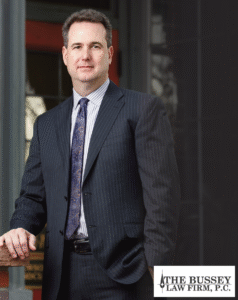 Trial lawyer Timothy R. Bussey is honored to be selected for inclusion in the Super Lawyers for the fourth consecutive year in a row. He is featured in the 2015 Colorado issue of Super Lawyers Magazine – an exclusive listing of only the best rated and peer recognized attorneys in the United States. Only five percent of those who qualify are chosen each year in each state, following a thorough process of evaluation that includes peer reviews, nominations, and independent research.
Mr. Bussey’s feature in the prestigious listing highlights his 23 years of experience and success in defending individuals accused of crimes. His consistent results in burglary, white collar crime, DUI, and unlawful sexual conduct cases, to name only a few, have earned him membership in The National Trial Lawyers Top 100 and the AV Preeminent rating by Martindale-Hubbell.
Colorado Appeals Court Rules That Defendants May Search Victims’ Homes
An appeals court in Colorado recently ruled that a person facing criminal charges in Colorado may search a victim’s home in order to gather information that may help their defense, according to a recent ABC News report.
The appeals court considered a case in which a man accused of sexual assault was denied access to the alleged crime scene, which was in a family member’s basement. The court ruled that because the accused individual already had photos of the crime scene, it was not inappropriate for the trial judge to deny him access to the scene itself – but the court also said that trial judges are allowed to grant access to crime scenes in similar cases, whether or not a scene is in an alleged victim’s home.