
Colorado Springs Criminal Defense Blog
Supreme Court Rules DNA Samples May be Taken on Arrest
The U.S. Supreme Court recently held that police officers may take a DNA sample from individuals arrested on suspicion of crime, using a cheek swab to collect cells for analysis.
The case heard by the Court focused on a 2009 Maryland case in which a man was arrested on suspicion of assault. The police took a DNA sample along with photographs and fingerprints while booking him at the local jail. Upon testing the DNA sample, they found that it matched a sample collected from the scene of an unsolved rape case that had occurred in 2008.
FBI, Colorado Police Statistics Paint Two Different Scenes of Crime in Denver
According to the Federal Bureau of Investigation, violent crime in Denver decreased in 2012, but property crime increased – a pattern that defied national trends, in which violent crime increased but property crime fell. However, this image of crime statistics in Denver differs from that painted by the local police department, which states that crime overall increased by 4.3 percent in the city in the past year.
 The FBI’s preliminary report found that throughout the United States, violent crime rates rose 1.2 percent and property crime rates fell 0.8 percent. In Denver, however, the FBI found that violent crime rates dropped 3.6 percent – but the Denver police found that these rates rose 9.3 percent in the same time period.
The difference was smaller between the FBI’s and the Denver police’s numbers for property crimes. The FBI estimated that property crime rose 3.3 percent in Denver in 2012, while the local police estimated that property crimes rose 3.4 percent.The FBI notes that its report for 2012 is preliminary; the final report may more closely resemble the findings of the Denver police. According to the Denver police force, the FBI’s tracking of crime statistics isn’t as comprehensive as local reports, which may account for the discrepancies.
Avoid a Colorado Boating Under the Influence Charge This Summer
Colorado prohibits boating under the influence (BUI) as well as driving under the influence (DUI). Both criminal charges can result in serious penalties, especially if a person is convicted. An experienced Colorado Springs BUI defense attorney can help you vigorously protect your rights, but the best way to avoid a BUI conviction is never to mix boating and alcohol.
The legal blood alcohol concentration (BAC) limit for operating any kind of boat or personal watercraft in Colorado is 0.08 percent, the same limit placed on operating a motor vehicle. Since 2008, Colorado’s BUI law has applied not only to motorboats and sailboats but to anyone operating any vessel or personal watercraft – even a small hand-paddled boat like a kayak.
How Will Recreational Marijuana Sales be Taxed?
 In November 2012, Colorado voters approved a measure that legalized the purchase and possession of marijuana for recreational use. When Amendment 64 was passed, retail sales for marijuana were set to begin on January 1, 2014. Since this approval, the Colorado Legislature has been forming the regulations that would accompany the legal purchase and possession of small amounts of marijuana. One of the regulations being voted on by the Colorado Legislature is how marijuana will be taxed.
Taxation of this controversial substance continues to benefit the state of Colorado. The state and county governments have already generated millions of dollars through the taxation of medical marijuana. In 2012, the State of Colorado generated more than $199,000,000 in taxation of medical marijuana retail sales. El Paso County generated almost $35,000,000 in tax revenue. The addition of recreational marijuana sales will substantially increase the amount of money this controversial substance generates for our state.
Can Law Enforcement Officers Take Your DNA When You are Booked on Criminal Charges?
 On June 3, the United States Supreme Court, in a 5-4 decision, ruled in Maryland v. King, 569 U. S. (2013) that it is not an unreasonable seizure, defined by the Fourth Amendment, for law enforcement officers to obtain a DNA swab from someone during the booking phase of an arrest. DNA testing is viewed as a technological advancement, and using this technological advancement during booking procedures can be viewed as either an aid for solving past crimes and preventing future crimes or an intrusion on individual’s Fourth Amendment right to be safe in their person from unreasonable searches and seizures.
Justice Kennedy, along with the majority, held that taking a DNA swab during regular booking activities is reasonable for the purpose of identifying the accused. Justice Kennedy reasons that this is no more intrusive as fingerprinting, matching tattoos to known gang symbols, or reviewing photos of an arrestee to aid in determining the identity of the suspect. Essentially, DNA would be a better tool to identify the accused because DNA cannot be altered like fingerprints or appearances.
Will Colorado Lower the B.A.C. to 0.05?
On May 14, 2013 the National Transportation Safety Board (NTSB) announced a new recommendation to pursue a national 0.05 blood alcohol concentration (B.A.C.) per se limit. A per se limit is the level of intoxication at which a person is automatically driving illegally, regardless of their actual level of impairment. The NTSB’s recommendation has resulted in debate about whether a lower B.A.C. would solve or create more problems with drinking and driving.
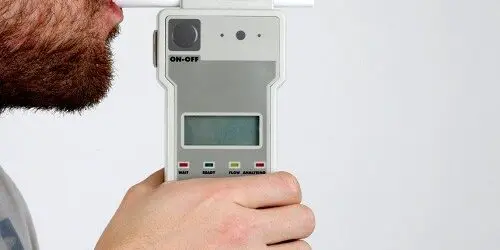 The lowering of B.A.C. limits started many years ago. In 2000, Congress used the power granted to them by the Tax and Spend Clause to pass the Department of Transportation Appropriations Act, which threatened to cut off transportation funds for states that did not have laws setting its B.A.C. limit at 0.08 by 2004. By 2004, all 50 states had lowered their B.A.C. level from 0.10 to 0.08. Now, the NTSB is presenting reasons to lower B.A.C. levels again.
The NTSB has cited several reasons for this reduction. According to the NTSB, the per se B.A.C. limit should be lowered for the following reasons:
Memorial Day Marks Start of Increased Colorado DUI Patrols
 In 2012, the 100 days immediately following Memorial Day saw 542 arrests of Colorado drivers on suspicion of drunk driving, according to the Colorado State Patrol. This year, the state patrol and other law enforcement agencies throughout the state are increasing their DUI patrols to crack down on suspected drunk driving in the state.
Called the “100 Days of Heat” campaign, the goal of the increased enforcement is to encourage sobriety and stop drunk drivers, according to the Colorado State Patrol. Since patrols and traffic stops are likely to increase, the number of arrests on suspicion of DUI may also increase – along with penalties like administrative license suspension, which takes place automatically when a Colorado driver is arrested on suspicion of driving under the influence (DUI) or driving while impaired (DWI).
What Should I Know About Probation in Colorado?
Probation is used in Colorado as an alternative to jail time or in addition to jail time for some criminal convictions. In 2008, Colorado had about 50,000 people on probation and an additional 18,000 receiving monitoring after a conviction of driving under the influence of alcohol (DUI).
Probation is available to both adults and juveniles who are convicted of a crime, depending on what conviction they receive. Even if a convicted individual does not meet the requirements for probation, however, a court may choose to impose probation if it is recommended by the district attorney.
Police: Property Crime Up 25 Percent in Colorado Springs Area
According to a recent article in the Colorado Springs Gazette, rates of property crimes, such as burglary, increased by 25 percent in the first quarter of 2013 when compared to the first quarter of 2012. Motor vehicle thefts increased 70 percent in the first quarter of 2013 when compared to 2012.
The Colorado Springs police force is responding to these increases in several ways. One of the most prominent involves the creation of a Motor Vehicle Theft Task Force (MVT Task Force) to address motor vehicle thefts specifically. The task force includes a sergeant and three officers, and it partners with other agencies to use technology like license plate readers and other resources to track down vehicles believed to be stolen, according to the agency.