
Colorado Springs Personal Injury Blog
Avoiding a Rear-End Collision While Bicycling
Bicycling is great exercise, and in the Colorado summer, it can also be a great deal of fun and help save on transportation costs and the environment. However, many types of accidents can befall a bicyclist when drivers are careless or distracted.
While most bicyclists fear rear-end collisions from cars, these types of accidents are rare, comprising only about 3.8 percent of all bicycle crashes. There are also several ways a bicyclist can protect himself or herself from a rear-end collision:
How to Prevent Work-Related Heat Illness this Summer
 Extreme heat is responsible for more weather-related deaths in the United States than any other environmental conditions, according to the Occupational Safety and Health Administration (OSHA). Since 2011, the organization has made spreading awareness of heat safety a priority, and encourages employers, as well as workers, to take simple precautions to avoid heat illnesses such as cramps, heat rash, excessive sweating, and heat stroke.
Heat illnesses are often caused when a person becomes dehydrated or overheated, typically due to environmental factors or overexertion, which then interferes with the human body’s ability to regulate its core temperature and cool down.
Outdoor workers are particularly at risk during the summer, but even workers that are indoors are susceptible to the dangers of exposure to extreme heat.
Employers are responsible, not only for ensuring that workers have a healthy and safe work environment, but also for providing training to help prevent on-the-job accidents or injuries from happening in the first place.
Education is Key in Colorado Pool Safety
For many Colorado families, summer means hanging out by the pool or relaxing in the hot tub. While poolside fun can mean great family memories, it can also cause serious injuries if an accident occurs or swimmers are not properly supervised.
According to the U.S. Consumer Product Safety Commission (CPSC), about 75 percent of those injured in pool and hot tub accidents each year are children age 15 or younger. Educate kids about the risks of swimming pools and hot tubs, and teach them how to protect themselves and others in order to preventing injuries.
When teaching kids about pool safety, it’s important to cover both the pool rules and the practical skills they need to protect themselves and others when swimming. Teach young children to never approach the pool without supervision and to never go in the water unless a responsible adult is watching them. Also, remind them to stay in shallow water unless they have the swimming skills to handle deeper water.
Four Tips For Boating Safety This Summer
 Memorial Day marks the official start of summer for many Colorado residents, and with summer comes the opportunity to engage in summer fun – including boating and swimming. If you’re planning on boating this summer, keep the following safety tips in mind to help you and your loved ones avoid accidents:
- Buy and wear life jackets. Personal flotation devices (PFDs) can help boaters and operators of personal watercraft survive an accident in which they are flung into the water, even if they are knocked unconscious or become otherwise incapable of keeping themselves afloat. Bring the proper life jackets for every member of your boating party and wear them – no matter how strong your swimming skills are.
Kids or Elderly Adults Traveling Alone? Here’s How to Keep Them Safe
 Summer is on its way, and with it come plenty of opportunities to travel to visit family, go on vacation, or to tackle other tasks. Many travelers through Colorado and the U.S. each year are children and elderly adults, both of whom may face particular risks when traveling alone.
Children and elderly adults may need to travel alone for several reasons – to visit family, for medical reasons, or for other purposes. If your child or an elderly family member must travel alone by plane, train, or bus this year, consider the following safety tips:
Celebrate North American Occupational Safety and Health Week this May
The first full week of May is North American Occupational Safety and Health Week. This week offers an opportunity for workplaces throughout the U.S. and Canada to re-commit to protecting worker safety and health – not only keeping workers from harm, but also protecting the company’s productivity by ensuring vital employees aren’t laid low by a preventable injury or disease.
In 2011, about 4,609 U.S. workers lost their lives in workplace accidents, according to the U.S. Bureau of Labor Statistics (BLS), and nearly 3.0 million more workers were injured. About 75 percent of these injuries and illnesses occurred in service industries, while the remainder took place in industries that produce goods.
Running Red Lights Can Cause Serious Injuries and Deaths
While most Colorado drivers know that running a red light can cause serious injuries or even death, many don’t realize just how pervasive the problem is. And while many Colorado communities have begun to address the problem with red light cameras and other tools, drivers who run red lights continue to pose a risk.
According to research from the Insurance Institute for Highway Safety (IIHS), 673 people lost their lives in 2010 and about 122,000 were injured in crashes caused by a driver who ran a red light. In context, this means a driver runs a red light in the U.S. about once every twenty minutes. About 39 percent of all red light runners cause a crash that leaves someone injured or killed.
About half of those who are injured or killed in red light running accidents are pedestrians, bicyclists, and passengers – not drivers. Meanwhile, drivers who run red lights are more likely to be younger, to not use their seat belts regularly, and to have poorer driving records than other drivers – including multiple speeding convictions.
Distracted Driving Continues to Put Drivers, Others at Risk
Despite campaigns by Colorado and other states to raise awareness of distracted driving risks and encourage drivers to keep their attention on the road, distracted driving continues to claim thousands of lives throughout the U.S. each year and to cause serious injuries to drivers, motorcyclists, pedestrians, and others on the road. Many experienced Colorado distracted driving injury attorneys have seen too many clients injured by just a moment’s loss of focus.
In 2011, the Governors Highway Safety Association (GHSA) released a detailed study of distracted driving. Key findings included:
Most drivers are distracted between 25 and 50 percent of the time while they are behind the wheel.
What are the Causes and Effects of Single-Vehicle Rollovers in Colorado?
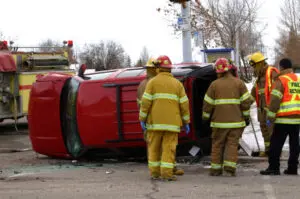 When a single-vehicle rollover accident occurs, it’s common to assume that the driver was somehow at fault. However, other factors can also lead to a rollover crash that does not involve more than one vehicle. Negligent drivers of other vehicles, roadway obstacles, adverse weather conditions, and defective vehicle steering or tires may also be to blame.
According to the National Highway Traffic Safety Administration (NHTSA), rollover accidents have a higher fatality rate than most other accidents on the road. One NHTSA study found that although only two percent of accidents on U.S. roads in any given year are rollovers, these fatal car accidents claim 23 percent of the lives lost in U.S. crashes every year.
Traumatic Brain Injuries Seen as Number-One Risk Factor for Dementia
A study published in JAMA Neurology recently suggests that the number-one risk factor for dementia or Alzheimer’s disease is a traumatic brain injury (TBI) – not the existence of amyloid plaques in the brain, once thought to be the defining factor of these diseases.
The study followed 61 men and women, ages 65 to 90, who had varying degrees of mental impairment and/or had been diagnosed with dementia. From time to time, the patients were given tests that tracked their memory, organization, and problem-solving skills. Their brains were also scanned using an MRI to check for vascular damage characteristic of TBI and a PET scanner to check for amyloid plaques in the brain.