
Car Accidents
Colorado Springs Woman Critically Injured in Car Crash
 A 77-year-old woman suffered critical injuries in a car crash, according to a report in The Gazette. Police say, a vehicle traveling northbound on Powers Boulevard attempted to make a left turn onto westbound Stetson Hills Boulevard, when it collided with another car. The driver of the northbound car, a 77-year-old woman, was listed in critical condition. The driver of the second vehicle suffered relatively minor injuries, officials said. The investigation is ongoing.
In a car crash involving two vehicles at a street intersection, a number of questions must be asked and answered to arrive at the truth. Did one of the vehicles make an illegal turn? Did one of the drivers fail to yield the right of way? Was speed, alcohol, or distracted driving a factor in the collision?
Rollover Crash in Colorado Springs Proves Fatal
A rollover crash on Highway 9 claimed the life of a passenger, KKTV News reports. Colorado State Patrol officials say the driver, a 43-year-old man, overcorrected when he drifted off the right side of the road. This caused the vehicle to spin out of control, cross over into oncoming lanes of traffic and roll over. The front passenger, a 37-year-old woman, was thrown from the vehicle. She was transported to an area hospital where she died. The driver and two children who were in the back seat were also airlifted to area hospitals. The driver is reported to be in fair condition. An investigation is ongoing.
Rollover crashes are often deadly because of the intensity with which they occur. There are several ways to prevent these types of tragic crashes:
Students Killed in Two Separate Colorado Springs Crashes
Within a 14-hour period on the same road, two Calhan students were killed and a third was critically injured. According to a news report in The Gazette, the two crashes occurred on Funk Road east of Calhan Highway about 35 miles northeast of Colorado Springs. The first crash occurred when a 16-year-old boy lost control of a 1994 Saturn. The vehicle spun before colliding with a fence and rolling over. The driver was critically injured and his 14-year-old sister was pronounced dead at the scene.
The second fatal accident occurred when a 16-year-old girl lost control of a 1997 Chrysler. Her vehicle went off the side of the road, rolled twice and hit a fence. She was ejected from her vehicle and pronounced dead at the scene of the crash.
Dealing With Insurance Companies After Your Colorado Springs Auto Accident
 If you have been injured in a Colorado Springs car accident, you will have to deal with insurance adjusters. It is important to remember that anything you tell an insurance adjuster can be used against you. The insurance company is not your friend. It is the objective of insurance companies to protect their bottom line by denying your claim. Remember, they are a business and need to make a profit. Making sure you get fair compensation for your losses is not their first priority. Therefore, it is in your best interest to have a basic understanding of how to deal with insurance companies if you have just been involved in an auto accident.
It is advisable to prepare yourself before calling your insurance company. Have in front of you information about the accident. Write down when and where the crash occurred. Have the details about those who were involved in the accident and their insurance providers, and about any witnesses of the accident. It is also useful to have any medical bills in front of you that you may have incurred since the crash.
Running Red Lights Can Cause Serious Injuries and Deaths
While most Colorado drivers know that running a red light can cause serious injuries or even death, many don’t realize just how pervasive the problem is. And while many Colorado communities have begun to address the problem with red light cameras and other tools, drivers who run red lights continue to pose a risk.
According to research from the Insurance Institute for Highway Safety (IIHS), 673 people lost their lives in 2010 and about 122,000 were injured in crashes caused by a driver who ran a red light. In context, this means a driver runs a red light in the U.S. about once every twenty minutes. About 39 percent of all red light runners cause a crash that leaves someone injured or killed.
About half of those who are injured or killed in red light running accidents are pedestrians, bicyclists, and passengers – not drivers. Meanwhile, drivers who run red lights are more likely to be younger, to not use their seat belts regularly, and to have poorer driving records than other drivers – including multiple speeding convictions.
Distracted Driving Continues to Put Drivers, Others at Risk
Despite campaigns by Colorado and other states to raise awareness of distracted driving risks and encourage drivers to keep their attention on the road, distracted driving continues to claim thousands of lives throughout the U.S. each year and to cause serious injuries to drivers, motorcyclists, pedestrians, and others on the road. Many experienced Colorado distracted driving injury attorneys have seen too many clients injured by just a moment’s loss of focus.
In 2011, the Governors Highway Safety Association (GHSA) released a detailed study of distracted driving. Key findings included:
Most drivers are distracted between 25 and 50 percent of the time while they are behind the wheel.
What are the Causes and Effects of Single-Vehicle Rollovers in Colorado?
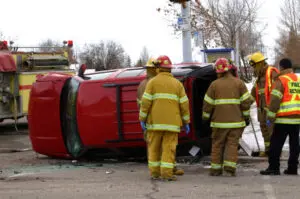 When a single-vehicle rollover accident occurs, it’s common to assume that the driver was somehow at fault. However, other factors can also lead to a rollover crash that does not involve more than one vehicle. Negligent drivers of other vehicles, roadway obstacles, adverse weather conditions, and defective vehicle steering or tires may also be to blame.
According to the National Highway Traffic Safety Administration (NHTSA), rollover accidents have a higher fatality rate than most other accidents on the road. One NHTSA study found that although only two percent of accidents on U.S. roads in any given year are rollovers, these fatal car accidents claim 23 percent of the lives lost in U.S. crashes every year.
Does Opioid Use Increase Car Accident Risks? One Study Says Yes
A recent study published in the Journal of the American Medical Association (JAMA) indicates that the risk of a serious car accident is linked to long-term opioid use – and that the risk of a crash goes up along with the dose.
The study examined patients who were prescribed varying strengths of opioids like oxycodone, hydrocodone, hydromorphone, and fentanyl. It looked both at patients who were taking the medications for the first time, those who had recently had their doses increased, and those who had been on a stable dose for a period of time.
Six Signs You’re Too Tired to Drive
 Drowsy driving can be as dangerous as drunk driving, according to a study by the AAA Foundation. However, as many as 10 percent of drivers actually take the risk of drowsy driving at least once per week, and 33 percent have done so in the past month. This is despite the fact that 96 percent of drivers who answered a AAA Foundation survey about drowsy driving agreed that it’s dangerous to drive when you’re sleepy.
How do you know if you’re too drowsy to drive? Here are six signs it’s not safe to be behind the wheel, courtesy of the National Sleep Foundation:
How to Properly Use a Seat Belt While Pregnant
Every driver and passenger should wear a seat belt when riding in a vehicle, according to the National Highway Traffic Safety Administration (NHTSA), including those who are pregnant. The NHTSA provides tips on how best to use your seat belt when you’re pregnant, including the following:
- Always wear your seat belt. Even if your car has air bags, wearing a seat belt is necessary to ensure the air bags do the job they’re designed to do in a crash. Wear the shoulder belt across your chest and away from your shoulders, and tuck the lap belt below your pregnant belly so that it sits snugly across your hips and pelvic bone.
- Move your seat. If you’re riding in the front seat while pregnant, move the seat as far back as possible. If you’re driving, put the seat as far back as you can while still reaching the pedals. Aim to keep at least 10 inches between your chest and the steering wheel or dashboard.
- Don’t turn off your air bags. Air bags and seat belts are designed to work together to provide protection in a crash. Most doctors recommend that pregnant women do not turn off the air bags in their vehicles.